


Feature:
Gemma Mahoney
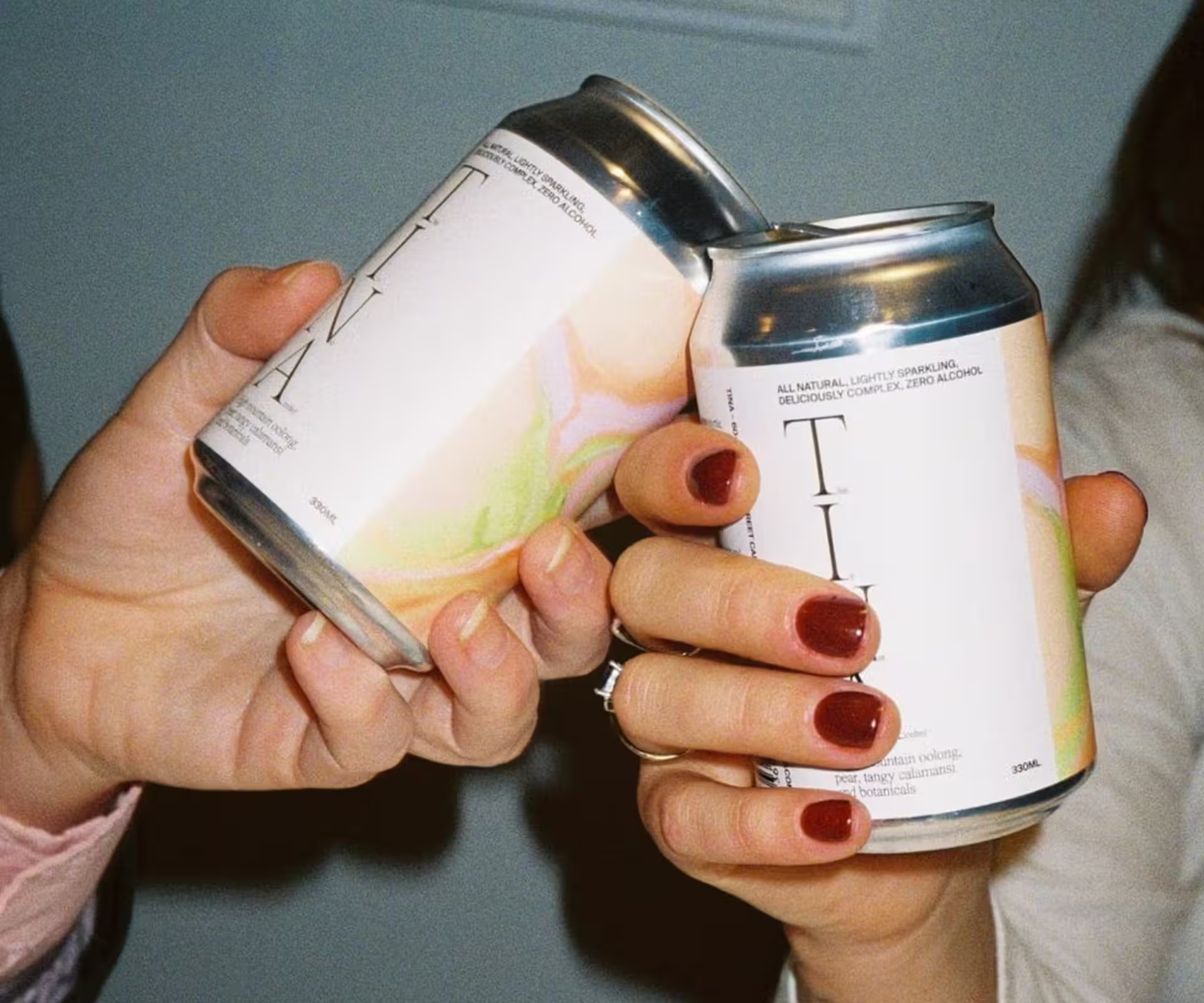
We caught up with Melbourne-based freelance designer Gemma Mahoney to chat all things type, design language, and navigating projects between Melbourne and Los Angeles.
What actually is design?
In my world design is anything visual made, imagined and created.
Why did it take your interest?
When I was a teenager, art was the thing I became obsessed with. I was tempted to go down the art route, but I felt unsure how practical it would be or whether it could lead to a stable income.
Everything shifted when I went to a university open day and saw design folios. It drew me in immediately. I began to understand design beyond just logos, which is often how people see graphic design. It felt like something I really connected with. I was drawn to how dynamic, expressive and broad it was.
What also drew me in was the idea of translating creativity into something tangible and practical, something that could exist in the real world. In some ways, I was also drawn to the idea that creating didn’t have to be personal in the same way art is.
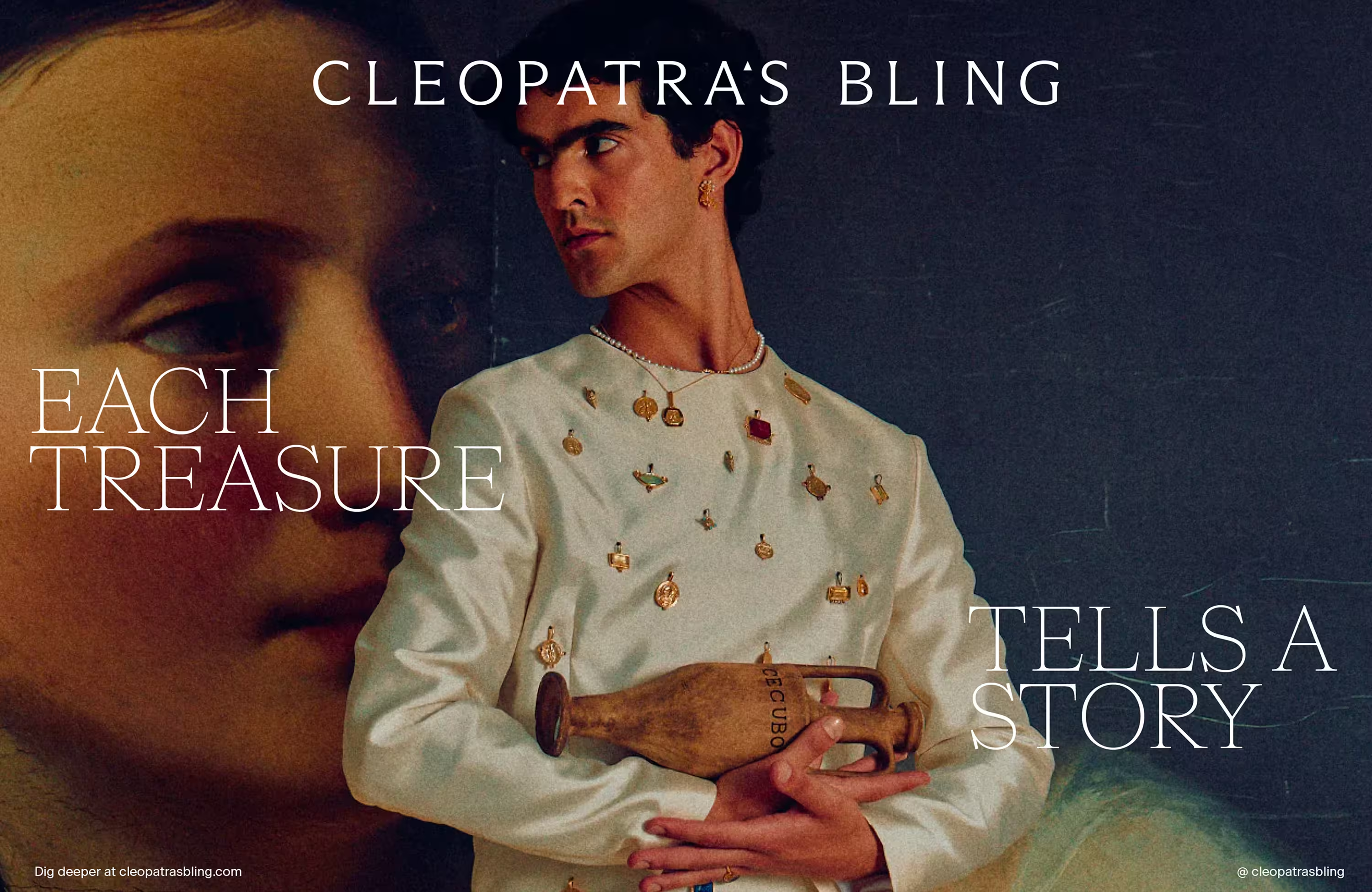
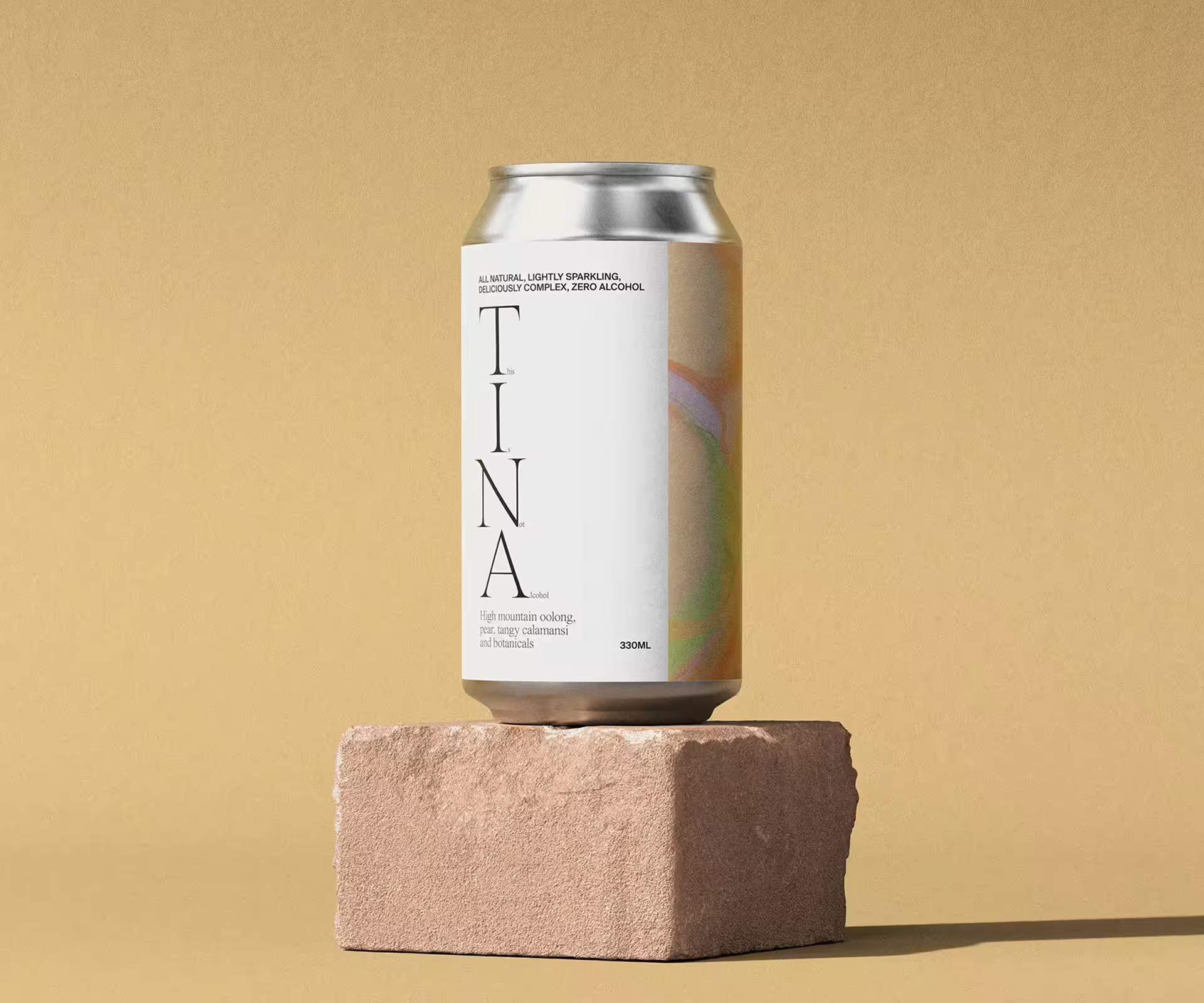
What also drew me in was the idea of translating creativity into something tangible and practical, something that could exist in the real world. In some ways, I was also drawn to the idea that creating didn’t have to be personal in the same way art is.

In a saturated and competitive market, how would you describe the unique perspective you bring to a project?
It can be hard to pinpoint exactly what makes someone different, especially yourself. Most designers develop an underlying sensitivity, a tone and style that runs through their work, and I think I’ve developed a certain visual language of my own while still being able to work across a range of styles.
My strongest sensitivities are type, layout and colour, with a particular pull towards serif typography and custom letterforms. I’m drawn to creating brand marks that feel considered and ownable, where the detail in the type carries a lot of the identity.
I tend to favour clarity, balance and restraint, with moments of expression and subtle play. I try to bring a balance of clarity and personality to my work, something that feels thoughtful, well resolved and quietly confident.
You have always had an interesting approach to language in design. I recall you talking about the shapes of letters, and how those shapes communicate things beyond just the definitional value of words. Can you tell me more about that?
In my early classes we learned about spacing between letters, and I started to realise how many small intricacies affect the way words translate. In my first design role as an intern, I was also encouraged to draw letters myself.
When you dive into typography you realise how much tone and personality a word can hold through the type, the weight and the spacing. A word can carry a completely different mood depending on how it’s set. Letters can also be shaped so they become more like forms than characters, something visual as much as something to read.
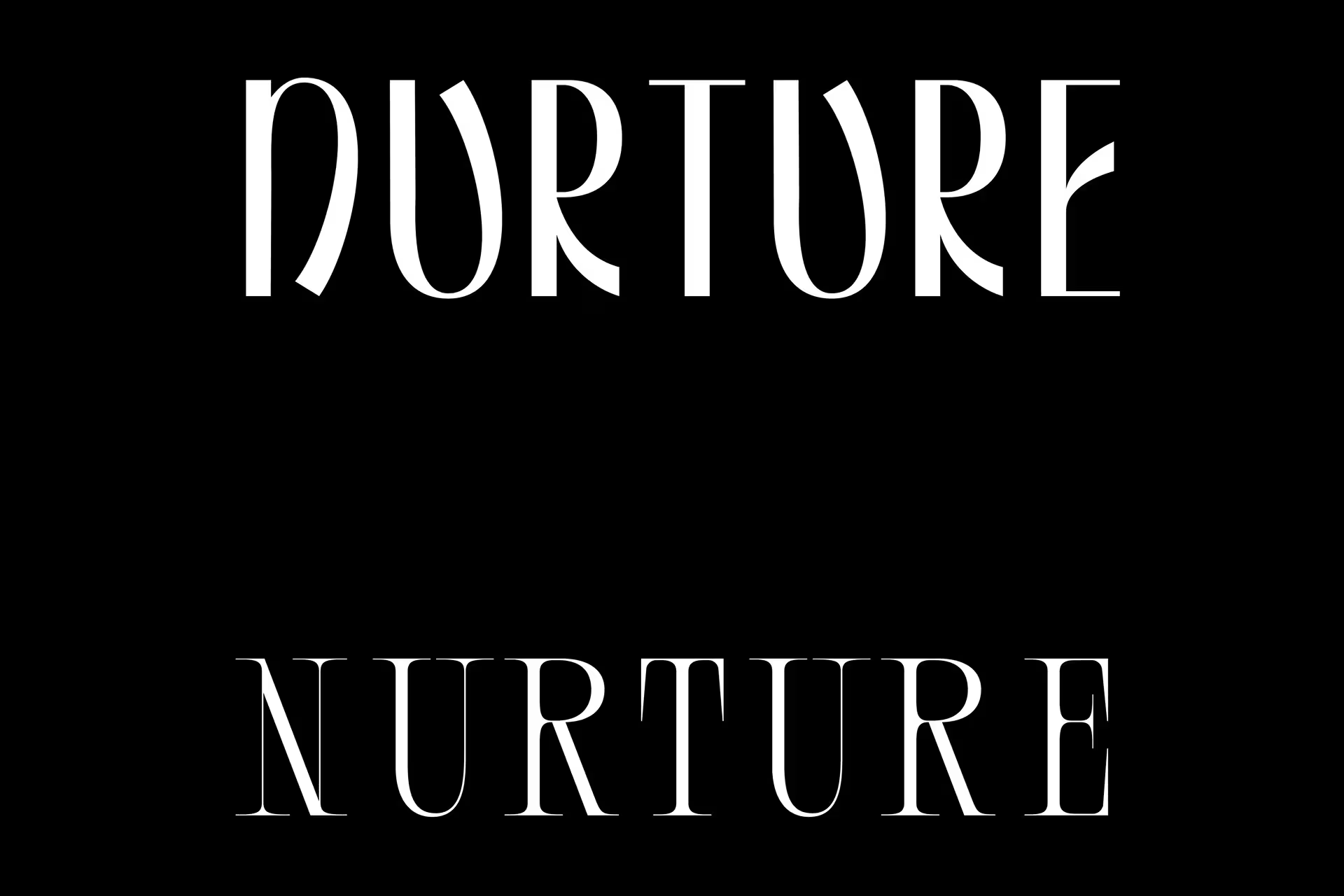
For instance, you might take a softer word like “nurture” and set it in something with curves and flow, and it naturally aligns with the meaning. But when that same word is set in a sharper, more exaggerated serif, it creates tension and shifts the tone — seen below. The word itself doesn’t change, but the feeling does.
That’s something I find really interesting. Typography has the ability to either support the meaning of a word or shift it and add personality.
Given that your work is creative, do you have an internal dialogue for the delineation between work and art or are they one and the same for you?
To me, design feels more rational and logical. It needs to fit within parameters and produce an outcome. It is usually guided by a client, an audience and a goal, and it often means stepping outside of yourself.
Art feels much more personal. It is more of an expression of your inner world and a space for personal exploration.
But I do often wonder whether design can also be a tool or a medium for art.
I think there are moments where the two overlap, especially when design becomes more expressive or less constrained by function. During my time at uni, design often did became a tool for art. I would create for the sake of it, to explore and play.
I think what separates them for me is intention. Design is usually solving something, whereas art is more open-ended.
I also find myself thinking about this in the context of digital tools. With the rise of AI and digital creation, I sometimes question the medium itself. Personally, I feel more drawn to art that is painted, handmade or carries a sense of being human hand.
So I do find myself questioning whether design can be a tool for art. I don’t think it is black and white, but I think the intention behind the work is what might define this.
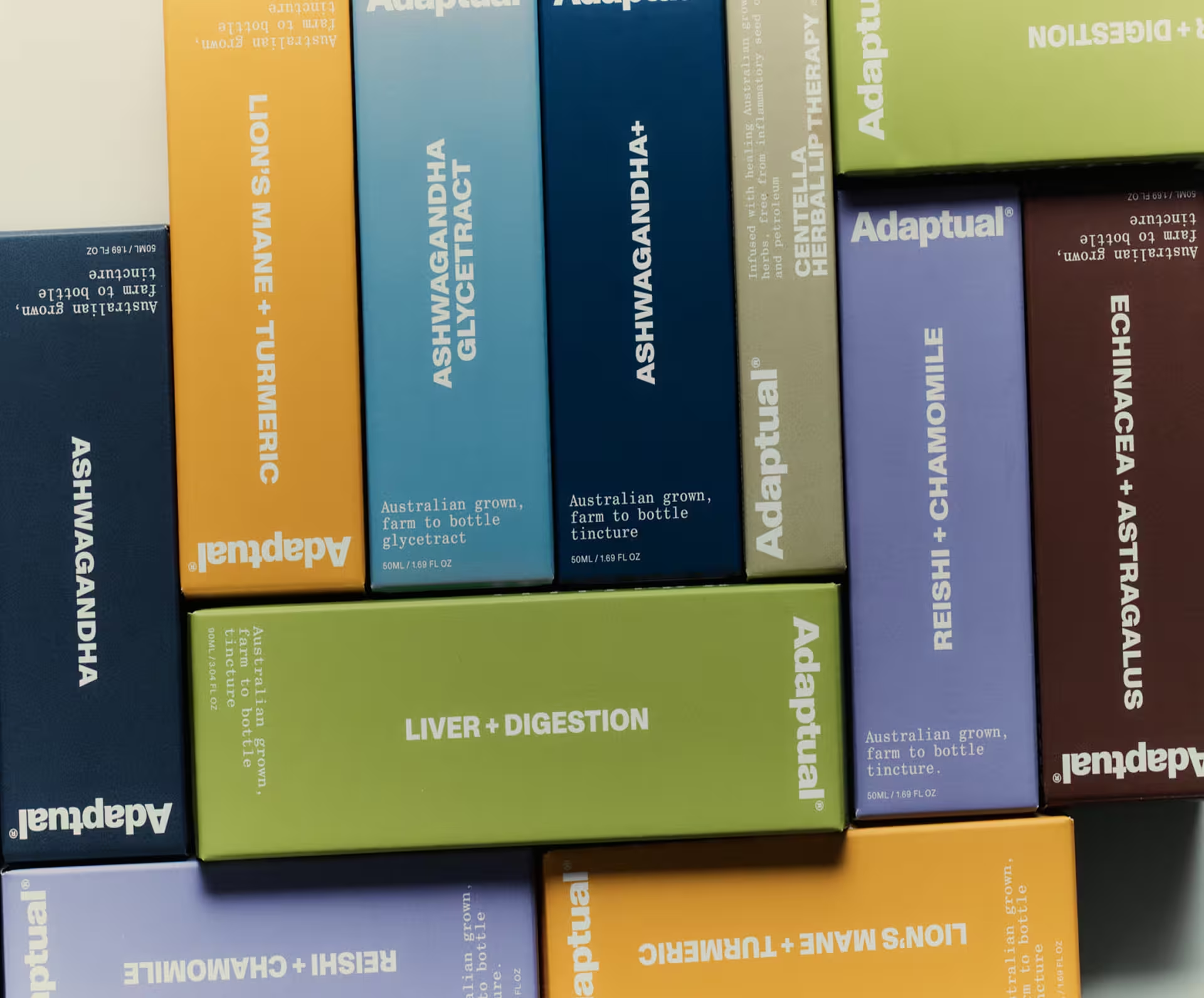
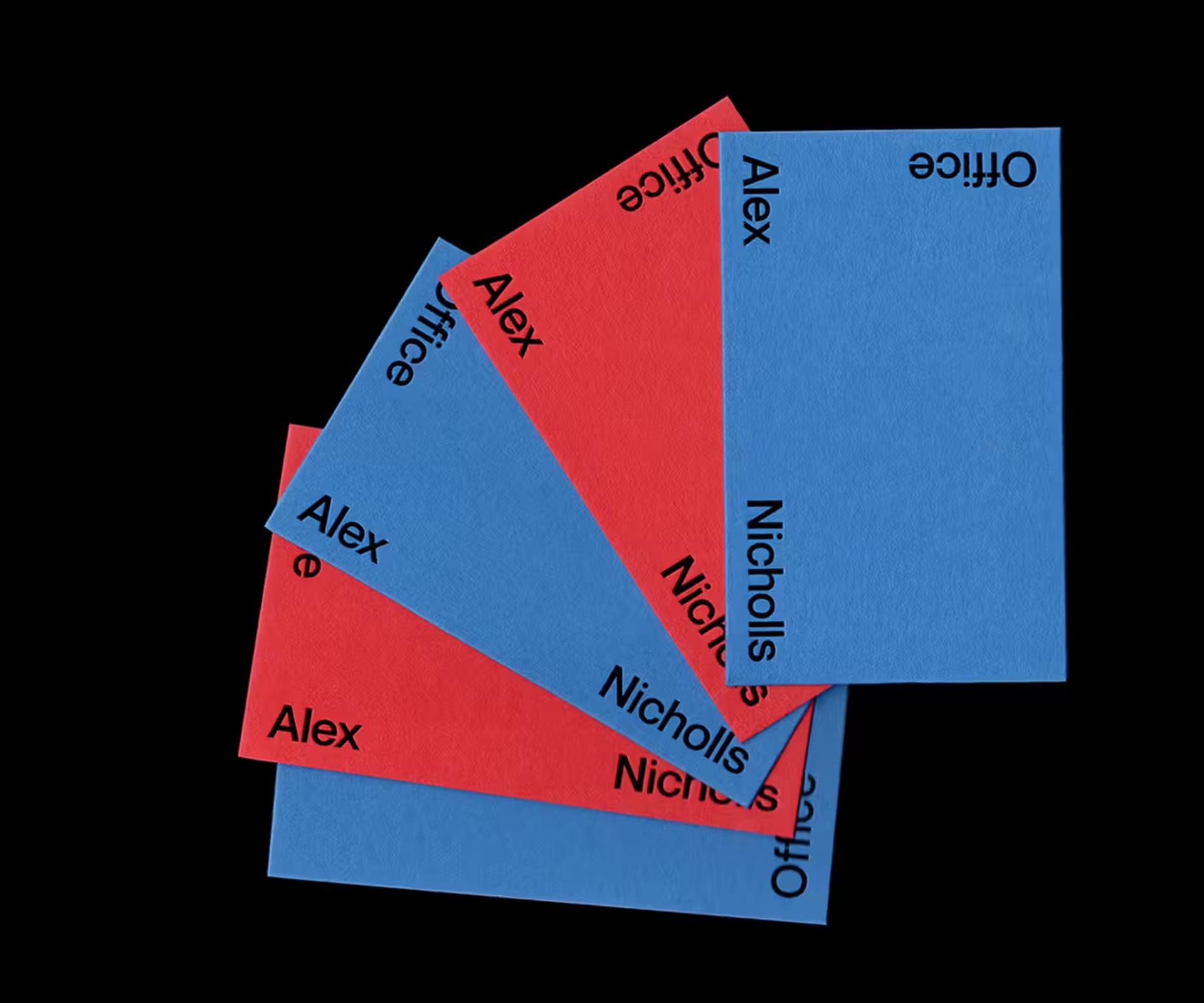
When I met you, you were working at a small agency as an assistant designer and you're now leading brand ID projects in the US and locally. What has that growth looked and felt like to you?
In many ways it has felt like a natural progression, like I’ve been pulled in certain directions rather than forcing anything.
In my first year [of university] I set up a website and an Instagram and started sharing my work. I kept things ambiguous and never mentioned I was a student.
During my third year, I was reached out by “It’s Nice That” to be featured (article here). They didn’t realise I was still a student until they went ahead with the interview, and that became part of the story. That moment definitely shifted things for me. I gained thousands of followers and started getting design enquiries from the UK. There was definitely an element of timing with how Instagram use to work, but putting my work out there early and consistently played a big part.
I then interned at Confetti Studio while studying which then turned into a role I stayed in through the rest of my studies. I think getting that opportunity came down to having a strong portfolio. I was quite intentional about that, I would often push my uni projects further or do them twice so I had more work to show, and I focused on branding projects specifically.
While working full-time, I kept posting online, and often spent my lunchtimes creating Instagram posts.
Leaving that role and moving into freelance wasn’t something I had originally planned, and I was incredibly scared. Since then, things continued to unfold quite naturally. When I left to work for myself, freelance work was already starting to come in, and once I made that decision, more opportunities followed. Over the last few years I have shifted into a design director role for Outset in LA, all while still having my own clients as well.
I didn’t start out with a very defined plan. I just wanted to enjoy what I do and be able to make a living from it. Looking back, consistency and putting my work out there have probably been the biggest drivers.


